
Why Digital Skills Are No Longer Optional in 2026
The world is changing faster than ever, and one thing has become clear: digital skills are no longer optional, they are essential.
From businesses moving online to companies adopting automation and artificial intelligence, the demand for practical technology skills continues to grow across every industry. Whether you’re a student, entrepreneur, job seeker, or working professional, learning the right digital skills can open doors to opportunities that were unimaginable just a few years ago.
The Rise of the Digital Economy
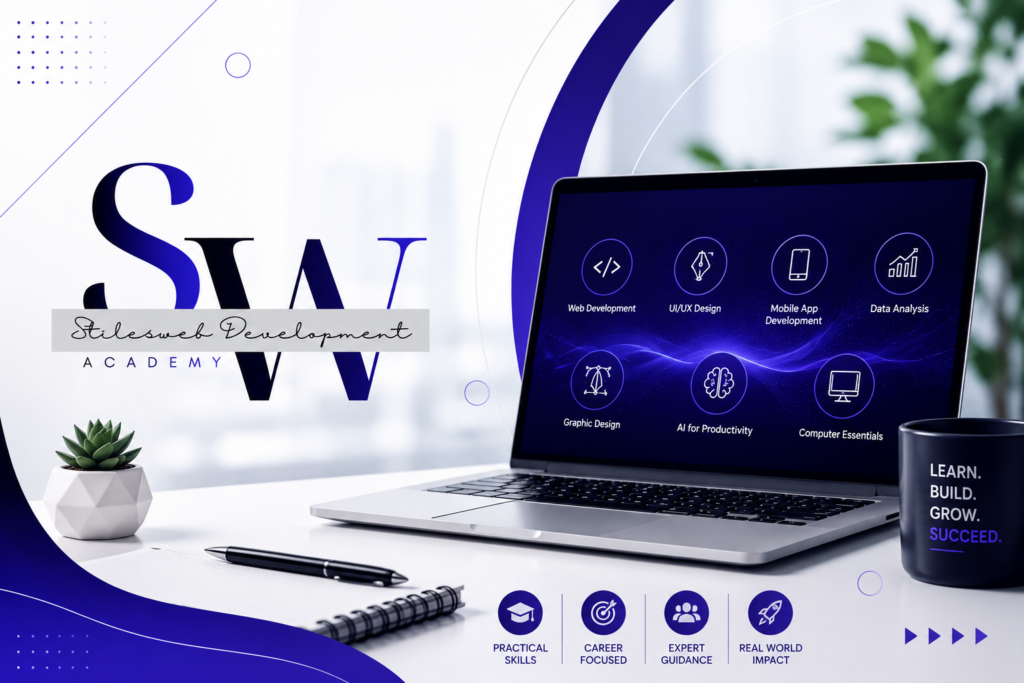
Today’s businesses need websites, mobile applications, data driven decisions, digital marketing materials, user friendly interfaces, and efficient workflows powered by technology. This demand has created opportunities for individuals with practical skills in areas such as:
- Web Development
- Full Stack Development
- Mobile App Development
- Data Analysis
- Artificial Intelligence
- UI/UX Design
- Graphic Design
- Computer Productivity Skills
The question is no longer whether technology will influence your career, but how prepared you are to thrive in a digital world.
Learning Skills That Matter
Many people spend months or years consuming tutorials without building real projects or gaining practical experience. Employers and clients, however, value people who can solve problems, build solutions, and demonstrate their abilities through practical work.
The most effective training combines:
- Structured learning paths
- Practical projects
- Industry relevant tools
- Real world applications
- Career focused guidance
The Power of Hybrid Learning
Modern education is evolving beyond traditional classrooms. Hybrid learning combines flexibility with practical engagement, allowing learners to develop skills at their own pace while still benefiting from expert guidance and mentorship.
This approach makes quality technology education more accessible to students and professionals regardless of location.
Preparing for the Future
Artificial Intelligence, automation, and digital transformation are not replacing opportunities, they are changing the skills required to seize them.
The individuals who invest in learning today will be the ones creating solutions, building businesses, and leading innovation tomorrow.
The future belongs to those who are ready to learn, build, and adapt.
What digital skill are you planning to learn next?


